April 29, 2008

Disadvantage of Using Sleeping Pills Instead of Natural Sleep Aid

There are several natural sleep aids that re widely available on the market. Although taking natural sleep remedies are generally safer that sleeping pills, they should not be taken unnecessarily and with caution. It is still safe to consult your doctor before taking any sleep aid.

Yes, it is true that natural sleep remedies contain natural ingredients but still they may not be suitable for you or they may interfere with prescription medication. Prescribed or over-the-counter sleeping aids are generally bad on the other hand.

Sleeping pills will break down the natural sleep cycle of the body. It could also affect the amount of deep sleep you attain during the night. This is because of the chemicals in sleeping pills that interfere with the normal brain wave patterns.

Filed under Health Topics by admin

Permalink Print

April 25, 2008

Disadvantage of Hormone Replacement Therapy

For the past few years hormone replacement therapy has been recommended to stop hot flashes. But it has been learned naturally as with the other medical treatments that the process of hormone replacement therapy increases a woman’s risk of developing different life threatening conditions. This includes blood clots and stroke.

Most of the experts are now suggesting women to use hormone replacement therapy for the shortest period of time as possible or else their health risk will continue to increases.

Filed under Health Topics by admin

Permalink Print

April 23, 2008

UNDERSTANDING CONSTIPATION

One time or another everyone gets constipated and usually the reason is poor diet and lack or exercise. However there are times that constipation is not serious and just go away. But constipation could be a warning sign of some serious problem. To understand constipation, we need to know how the colon or the large intestine works and how to colon cleanse. When the foods move through the colon, the colon absorbs water from the food while it forms waste or stool. The colon then pushes the stool toward the rectum due to muscle contraction. And because of the water that has been absorbed, the stool that reaches the rectum became solid. Constipation occurs when the  muscle contraction in the colon which is the reason why the stool move through the colon so slow and as a result, stools became hard and dry.


Filed under Health Topics by admin

Permalink Print

April 18, 2008

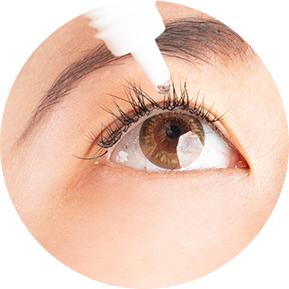
Eye Care

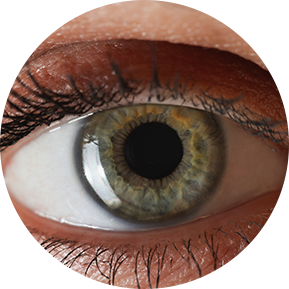
Eyes are organ that detect light. Different kinds of light-sensitive organs are found in a variety of animals. The simplest eyes do nothing but detect whether the surroundings are light or dark, which is sufficient for the entrainment of circadian rhythms but can hardly be called vision. More complex eyes can distinguish shapes and colors. The visual fields of some such complex eyes largely overlap, to allow better depth perception (binocular vision), as in humans; and others are placed so as to minimize the overlap, such as in rabbits and chameleons.

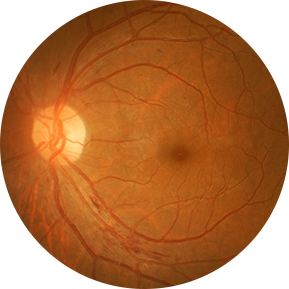
In the human eye, light enters the pupil and is focused on the retina by the lens. Light-sensitive nerve cells called rods (for brightness) and cones (for color) react to the light. They interact with each other and send messages to the brain that indicate brightness, color, and contour.

The first proto-eyes evolved among animals 540 million years ago. Almost all animals have eyes, or descend from animals that did.

In most vertebrates and some mollusks, the eye works by allowing light to enter it and project onto a light-sensitive panel of cells, known as the retina, at the rear of the eye. The cone cells (for color) and the rod cells (for low-light contrasts) in the retina detect and convert light into neural signals. The visual signals are then transmitted to the brain via the optic nerve. Such eyes are typically roughly spherical, filled with a transparent gel-like substance called the vitreous humor, with a focusing lens and often an iris; the relaxing or tightening of the muscles around the iris change the size of the pupil, thereby regulating the amount of light that enters the eye, and reducing aberrations when there is enough light.

The eyes of cephalopods, fish, amphibians and snakes usually have fixed lens shapes, and focusing vision is achieved by telescoping the lens—similar to how a camera focuses.

Compound eyes are found among the arthropods and are composed of many simple facets which give a pixilated image (not multiple images, as is often believed). Each sensor has its own lens and photosensitive cells. Some eyes have up to 28,000 such sensors, which are arranged hexagonally, and which can give a full 360-degree field of vision. Compound eyes are very sensitive to motion. Some arthropods, including many Strepsiptera, have compound eyes of only a few facets, each with a retina capable of creating an image, creating multiple-image vision. With each eye viewing a different angle, a fused image from all the eyes is produced in the brain, providing very wide-angle, high-resolution images.

Possessing detailed hyperspectral color vision, the Mantis shrimp has been reported to have the world's most complex color vision system. Trilobites, which are now extinct, had unique compound eyes. They used clear calcite crystals to form the lenses of their eyes. In this, they differ from most other arthropods, which have soft eyes. The number of lenses in such an eye varied, however: some trilobites had only one, and some had thousands of lenses in one eye.

In contrast to compound eyes, simple eyes are those that have a single lens. For example, jumping spiders have a large pair of simple eyes with a narrow field of view, supported by an array of other, smaller eyes for peripheral vision. Some insect larvae, like caterpillars, have a different type of simple eye (stemmata) which gives a rough image. Some of the simplest eyes, called ocelli, can be found in animals like snails, who cannot actually "see" in the normal sense. They do have photosensitive cells, but no lens and no other means of projecting an image onto these cells. They can distinguish between light and dark, but no more. This enables snails to keep out of direct sunlight.

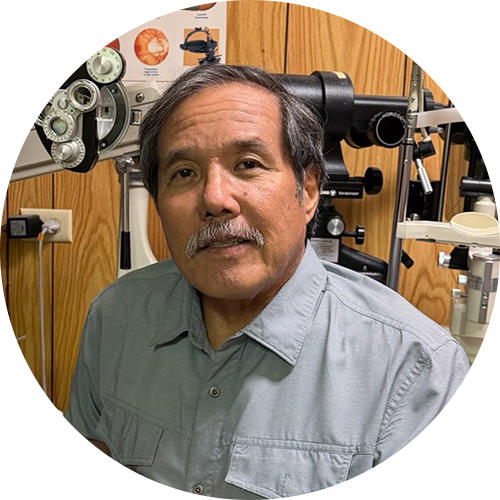
Various eye care professionals


  • Ophthalmologist - An ophthalmologist is a medical doctor who specializes in eye care. In the US, this often requires four years of college, four years of medical school, and four to six more years of residency, internship, and fellowship.
  • Optometrist - An optometrist is an optometric doctor trained to provide refractive correction and diagnose/treat common issues. In the US, the standard education is four years of college and four years at an accredited optometry school.
  • Ophthalmic medical practitioner - Similar to an optometrist (in the UK).
  • Oculist - Older term for either an ophthalmologist or optometrist.
  • Ocularist - Ocularists specialize in the fabrication and fitting of ocular prostheses for people who have lost eyes due to trauma or illness.
  • Optician - An optician specializes in the fabrication and fitting of spectacles. They may also be referred to as an Optical Dispenser. The prescription for the spectacles must be supplied by an ophthalmologist or optometrist.
  • Orthoptist - Orthoptists specialize in ocular motility, which is the movement of the eye controlled by the extraocular muscles.
  • Vision therapist - Vision therapists work with patients that require therapy, such as low vision patients.
  • Ophthalmic medical personnel - "OMP" is a collective term for allied health personnel in ophthalmology. It is often used to refer to non-specialized personnel (unlike ocularists or opticians).


Filed under Health Topics by admin

Permalink Print